Saturday, October 12, 2013

Butterflies - The Eastern Tiger Swallowtail


This beautiful butterfly graced my garden from July through August.


He is the Eastern Tiger Swallowtail


He didn't seem to mind my following him from flower to flower.


Nor did he mind me leaning in for real close shots of him.


At times he acted like a model; knowing just how to pose for the camera.


It's scientific name is Papilio glaucus Linnaeus 1758


gorgeous


   Look at the beautiful markings; the blue, the yellow crescents at the edge of the blue;
 

the little touches of orange


 I love this one.  He is so busy at work getting that little proboscis into the tiny pollen filled clusters.


Only thing left to say is "Simply beautiful" and I hope I see them next year.


Monday, August 19, 2013

What's Blooming

Firecracker plant


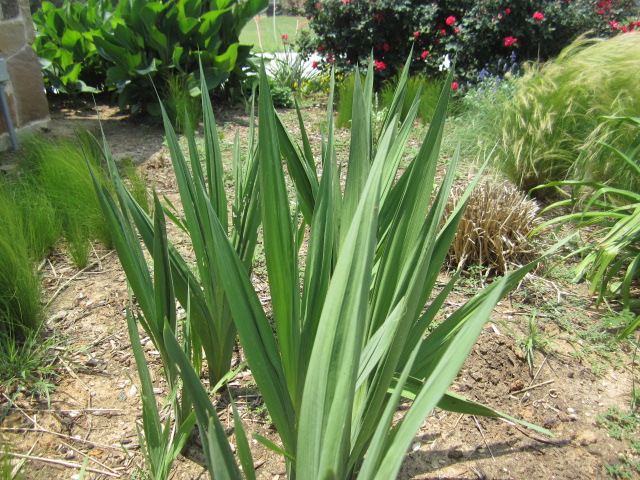
Gladiolas - since this photo was take the grasshoppers have really wreaked havoc on the greenery of these.  I took care of them though.  It was brutal.


Day lilies - These were given to me by my sister a couple of years ago.


 Texas Sage.  The honey bees are loving it in the morning!


Not out in the garden but just as important as it holds a special place in front of the kitchen sink. 
varia.ated African Violet

Sunday, August 18, 2013

Zinnia's From Seed

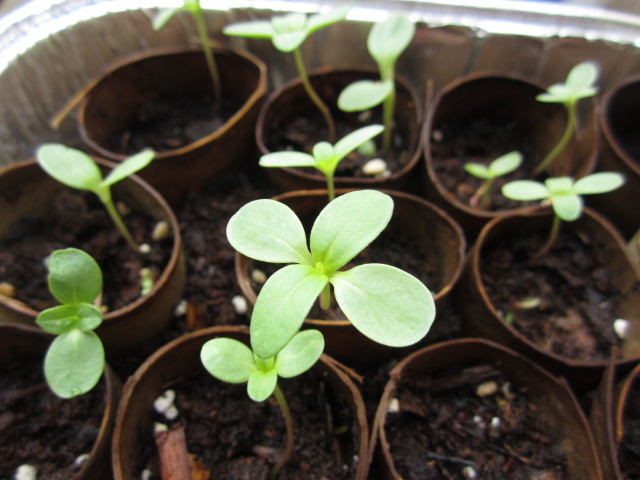
I gain a tremendous satisfaction from growing flowers and plants from seed.  My repertoire is not large but I have, over the years, chosen several that do very well with me.  One of those plants are Zinnias.

They are bright, you can select a rainbow of colors and sizes.  And they are easy.


I gather all of my seed starting paraphernalia which includes plant markers.  I made these from an old plastic milk carton that was going to the dump.  Sharpie permanent markers work great to list the seedlings you are planting.
 

This past Spring I collected all sorts of aluminum pans and trays that were left over from a big bake sale at work.


With an ice pick I poked holes all over the bottom of the pan for drainage.


Start with a good Seed Starting potting mix that is light and soiless.  Those delicate roots need room to move easily.


Fill the container with the seedling mixture and dampen thoroughly but not muddy wet


Work the water and seed planting mixture until everything is damp.


Once planting medium is ready, separate your seeds out onto a dark piece paper.


Twist the toilet/paper towel rolls (cut to about an inch and a half) down into the planting medium.  These will be your little pots that will hold the seeds.


Using a pair of tweezers, place about 3 seeds in each container. 


Using a spray bottle, spritz thoroughly.  over the top of the pan with Saran Wrap to create a small green house effect.  Once you have sprouts, remove the plastic wrap and start maintaining your seedlings.


When you have two sets of leaves, very carefully tear off one set of leaves.  This will help the plant grow bushier.


Once they have several leaves, plant them in a sunny location in your garden


I've to see the geometrics of the buds as they open


 I love to watch the formation of a bloom


Once they start blooming they keep going and going.  Deadheading is a good idea; you'll get so many more blooms by doing so

 Zinnias make me smile


 Water them regularly while they establish and then they can be quite drought tolerant.. You'll be able to tell when they need water because their leaves begin to curl in.  They love the sun and the heat.  Perfect for our Texas summers.


 One more treat they provide is that they bring in an abundance of butterflies, bees and hummingbirds to the garden.

Friday, July 26, 2013

Esperanza


Tecoma stans.  Also known as Esperanza, Yellow Bells, Yellow Elder & Hardy Yellow Trumpet.  It dons large yellow trumpet-shaped flowers.  And how it blooms!  I got to enjoy three seasons of blooming this past year; spring, summer and autumn.


This shrub was a delight in the garden.  It thrived through the heat and drought and tripled in size from the time I planted it.


The flowers have a pleasing fragrance although a little different.  The Indians made bows from its wood, and in Mexico a beer was prepared from its roots; it has also been used for a variety of medicines.


The flowers also provide nectar for bees.


There are several bumble bees who have claimed this as their eating establishment.  I think this is his happy hour.


This was supposed to have been winter hardy here in Fort Worth but, alas, it never came back this past Spring.  I have truly missed it in the garden this summer.

Surprisingly Lovey didn't care for it.  I don't understand why but I'm going to plant another one next year anyway; perhaps in a different spot where he won't have to look at it.


Tuesday, May 28, 2013

Weekly Stroll

The garden is beginning to come alive with some color.  Here's what was going on in the garden this week.


Firecracker Plant - this will have red bell-shaped flowers that the hummingbirds love


The Silver Leaf Dwarf elephant ear is peeking through; I see that it is spreading this year, which is what I want it to do


As is Black Magic

the gladiolas came back this year


A canna getting ready to pop open

Lantana


Red Yucca - the hummers love these too


Salvia came back.  I have a white one as well that I transplanted to a different spot


The Amaryllis was especially beautiful this year - a friend at work gave this to me for Christmas 3 years ago.


Yarrow

Monday, May 6, 2013

They've Flown the Coop

Saturday morning I was standing in the kitchen watching the finches outside the window when it dawned on me that one of them was actually one of the babies.  She was coaching him/her to fly (for convenience I'll call baby Uno).  They both left the roof edge and flew across the street to the neighbor's yard and back with that fast dipping motion they perform when they fly fast.  They turned right around without stopping and lighted on the roof again. 


Then Uno decided to take a leap off the roof but couldn't quite get the air needed and fluttered down and sat on one of my lilies.   I ran for my camera but it's not a really good photo.  Mama was right beside her on the grass for support and safety.  Uno is really hidden by the leaves, but she's there!


The rest of the clutch patiently waiting their turn.


Throughout the day I checked the nest and each time there was one less baby in the nest.

This is another one that likes to flit down onto the lily leaves.  I wish I had had more time to follow all of the goings on with the birds but I had tons of gardening chores to get done.
Late afternoon I no longer saw little heads bobbing up and down and wings flapping in the nest.  One by one Mama had helped each of here little fledglings to fly the coop.  Oh to be inside the mind of those little birds flying for the first time.  I imagine it's exhilarating.


.


This is the first sign that all 5 eggs had hatched. One out of the nest and four still crammed in there equal 5. I was anxious to see if there was an egg left unhatched in the nest. That would confirm once and for all just how many babies had hatched. I had trouble telling if there were 3, 4, or 5 nestlings in the nest. They were so on top of each other in that little nest. I read that the Mama usually removed the pieces of shell from hatched eggs. I would think it really hard for her to remove a whole egg that turned out to be a dud; other than maybe pushing it out of the nest. I never saw anything on the ground so I assumed there were 4 hatched birdies and one egg left. Today would be my day to tell.  I figured with all the birdies fledged there would be a whole egg still sitting in the nest....or not.

I secretly hoped that fifth egg would be sitting in the nest, left for me to claim.  How cool it would be to have such a beautiful egg.  I'd carefully blow it out and find some sort of craft to incorporate it into.  However, when I took the fern down and got a good look into the nest there was no extra egg.  I therefore have to assume that there were five healthy nestlings and today they found their freedom.

I also hoped I would be able to keep the nest.  I have read that you could put a nest in a baggie and toss it in the freezer for several days; guaranteed to kill mites, etc. the nest might harbor and you'd be left with a cute little nest to keep as a memory; to use in arrangements in the house and so on.


Take a good look at this nest.  Would you want to clean this up?  I think not.


It's been fun to watch this process of God' s handy work in nature, right down to the night we went below freezing.  Would they be able to keep themselves warm?  Would Mama come over and sleep on top of them to keep them warm?  I didn't know but could only pray for their safety.  That was Thursday night and Friday it was such a relief to see those little bobble heads in the  nest!

Now, can I put a new fern on the front porch please?????  (They don't have more than one brood a year do they?!?!?!?!!??!!??)   Arghhhhhhhhhhhhh!!!!